

Mission Statement:
To endeavor to bring to all residents of the Five States the most current and important news from across the entire Five States region. Never yellow, the Five States Herald vows to serve only the people of the Five States, from New Austin to Lemoyne, free of charge now and forever.
Pondering on Ancestors Past
By Sofia Kathleen Fairfax – Lead Correspondent
What do the dead think of the living? It’s a thought that has crossed all our minds. Do they look on, pleased that we still dwell here? Or do they resent us for living, while they do not? I cannot answer these questions, and neither can I answer what they would think of us when they still drew breath.
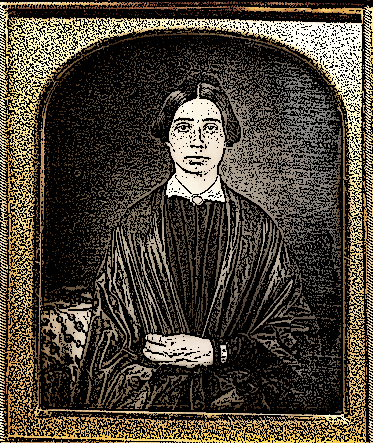
I was cleaning my home this week, and I stopped to look at old photographs of Fairfaxes who came before me. I didn’t really know my grandmother, Isabelle, or my great aunts, Lucrecia and Pauline. I only know the stories I have heard, told to me second-hand at best. They did good things, helped others, and were kind. They weren’t saints, but few are. Still, stories are just stories; I was not present for them. Were they truly good people, or would they have been disgusted if I had lived in their time? My heart wishes it were the former, but the heart doesn’t know things; it only wishes.
I don’t know how much time I spent looking at those photos, but it was enough to make me forlorn for people I will never meet in this lifetime. It is perhaps unusual to mourn for someone who died long before your birth, but I was never good at lying; it is how I feel. There is no satisfactory answer to my questions; all we can do is find ways to live with these questions, until the end.

Hunter recounts hard lesson after ram turns the tables
By Wylie Frey
A weathered huntress passing through New Austin this week shared the tale of a chase that ended with bruises instead of trophies. She said she had followed the sign of a ram since morning, knowing full well that once afternoon shadows lengthened the animal would likely vanish back into rough country. Her quarry was the famed Gabbro Horn Ram, a striking white beast marked by black curling horns and much admired by hunters who seldom catch sight of it twice. After hours of tracking prints and broken scrub, she finally cornered the creature near the banks of the San Luis River, where it stood broad and noble against the light. Yet just as she steadied to fire, the ram sprang aside with uncommon speed.
Before she could ready a second shot, the beast wheeled and came straight at her. She described a blur of white hide, horn, dust, and regret before the ram struck and bounded away unharmed. Sore, shaken, and wiser, she managed to reach Tumbleweed, where no physician keeps office but where frontier counsel is never in short supply. Townsfolk advised rest, quiet, and the humility to accept being bested by nature. She obeyed. Three days later she departed with less pain in her ribs, more caution in her step, and a pride more wounded than any bone.

Federal men begin inspection of Bacchus Bridge
By Jane Duran
As reported last week, federal investigators have now reached the heights of Ambarino and commenced their formal assessment of Bacchus Bridge, the towering rail span long cited as a vulnerable hinge in northern transport. Witnesses observed engineers, surveyors, and armed escorts examining the ironworks, sounding the timbers of the approaches, and studying the ravines and ridgelines from which mischief-makers might operate concealed. Temporary camps have been raised near the line despite bitter winds, with mule teams laboring to haul instruments and provisions through rough country. Officials again withheld comment on any immediate danger, yet stated their purpose is to determine what repairs, guard placements, and defensive measures may be necessary to preserve uninterrupted passage across one of the Five States’ most consequential crossings.


Trick shooter makes Blackwater home!
By Odell Clifton
A stranger arrived in Blackwater just a few weeks ago, bragging of being the greatest show in all of Five States. While relaxing in the Blackwater Saloon having a drink, or perhaps two or three, the man said he could not miss. “I found the gun, truth be told,” the man admitted, “on a dead man, believe it or not, and decided that such craftsmanship shouldn’t be allowed to fall into ruin.” The gun was described as perfectly balanced, with surprisingly little kick considering the power of the firearm. According to the man, the moment he held the gun he knew it felt right and even saved a woman. “I heard calls for help and felt I could be the one to provide it,” he boasted, “there were half a dozen men and I fired half a dozen shots, and they were all dead.”
Though the story was not fully believed by many, his impromptu trick shot shows have made them believers. “I watched him, I fancied myself a gunslinger in my youth,” one resident said, “but I tossed a quarter into the air, he winked at me, looked at the last minute and fired. Found my quarter on the ground with a hole in it.” Townsfolk cannot get enough and line up to buy tickets to his show and even longer lines for autographs.


Valentine amused by wandering forager in merry confusion
By Emery Cosberry
Valentine residents were treated to an uncommon spectacle when a cowpoke entered town in a curious and unsteady humor, stepping light as a dancer one moment and near toppling into the dust the next. Witnesses agreed the traveler had not touched whiskey, beer, nor any bottle known to local bars, yet laughed freely at passing wagons, tipped their hat to fence posts, and greeted strangers as lifelong companions. Several townsfolk gathered near the stockyards as the visitor, loose of tongue and bright of eye, declared the day’s labor a triumph of woodland skill. They announced they had spent the daylight hours foraging in search of bay bolete, a mushroom much prized in these parts.
The merriment deepened when the cowpoke produced the remainder of their harvest for inspection. A passing traveler took one glance and burst into laughter. “Those weren’t bay bolete, not even close,” the traveler said. “Those we call the magic mushrooms, sure as the sun rises those will take you on a wild trip.” At this revelation, the assembled crowd roared nearly as loud as the subject of the tale, who accepted the news with delighted astonishment and then attempted to compliment a hitching rail for its fine manners. No harm came of the affair, and many in Valentine declared it the most wholesome entertainment seen there in weeks.

Saint Denis raises purse to drive coyotes from its streets
By Aloysius Levron
Prominent residents, shopkeepers, dock agents, and neighborhood associations of Saint Denis have combined their funds to establish a growing purse for coyote bounties, following repeated complaints that the animals have grown bold enough to wander into the city proper. Reports from the northern wards and factory lanes tell of lean shapes slipping between alleys after dusk, upsetting refuse bins and startling late pedestrians. Though naturalists note that coyotes seldom trouble full-grown adults, householders fear for unattended children and for the many small dogs, cats, and other small creatures kept in the finer quarters of town. By daylight, the city’s clamor of wagons, streetcars, whistles, and crowds appears sufficient to keep such prowlers scarce.
It is in the still hours of night, citizens say, that the danger grows. With boulevards emptied and side streets hushed, watchers claim the animals stalk quietly in search of scraps or easier prey. The newly raised bounties are intended not merely to thin their number, but to drive surviving packs back toward marsh, field, and timber beyond the city’s bounds. “This is the city, and it is our home,” declared one well-to-do resident who contributed handsomely to the fund, “they need to stay in their own habitat and stay out of ours.”
Canned peaches under suspicion after wave of stomach misery across the Five States
By Adam Parvey
Merchants from Blackwater to Saint Denis were yesterday pulling tins of canned peaches from their shelves after a growing number of cowpokes, teamsters, ranch wives, and rail hands reported sudden cramping, sweats, and an urgent acquaintance with the nearest privy. Witnesses in Valentine spoke of men turning pale upon the boardwalk, while in Rhodes one man was said to have abandoned a card game mid-hand and fled behind the livery. Storekeepers claim dozens of complaints have arrived within the week, enough to sour confidence in the once-popular fruit. Several traders in Tumbleweed and Annesburg have posted notices warning customers to return unopened cans until the matter is better understood.
The concern centers upon tins packed by Big Valley, the company responsible for processing and sealing much of the season’s peach crop. A spokesman for the company stated that all reports thus far have been confined to the Five States, with no neighboring territories yet declaring trouble from the same goods. Suggesting that the local batch or perhaps the local habit is the problem. “No one person should eat five cans of peaches in one sitting, which is what we have been reading,” said the spokesman, adding that the firm would continue to observe developments. Physicians consulted by the Herald noted that moderation is seldom regretted, though they declined to say whether appetite alone explains the breadth of complaints now troubling the region.

