

Mission Statement:
To endeavor to bring to all residents of the Five States the most current and important news from across the entire Five States region. Never yellow, the Five States Herald vows to serve only the people of the Five States, from New Austin to Lemoyne, free of charge now and forever.
Private bounties more widespread than previously believed
By Adam Parvey
Across the frontier troubling new details have emerged regarding the growing trade of so-called private bounties, long whispered about in saloons and stage depots from one end of the territory to the other. Previous reports linked the practice to notorious hunters such as Tom Lockburn and James Langton. Now, an anonymous source claims many of these pursuits are backed not by lawful warrants, but by counterfeit writs crafted to resemble official documents.
According to the source, the papers are produced using stolen seals, copied signatures, and presses meant for false banknotes. The scheme appears simple and deadly. When local deputies arrive at the scene of a shooting, the hunter produces a writ naming the slain party as wanted, dangerous, and marked for capture dead or alive. With towns short on staff and judges far away, many lawmen reportedly glance at the paper, nod once, and move on. Since the bodies are rarely brought to county jails, and the payment comes from private hands rather than the sheriff’s desk, deeper investigations seldom begin.
Legal men consulted by this paper warn that such fraud turns murder into theater. A forged writ waved at the right moment may transform a killing in broad daylight into something mistaken for justice. One retired marshal put it plainly: “If any man can print himself permission to kill, then the law has become just another costume.” Authorities have promised renewed scrutiny, though critics note promises travel slower than bullets. Meanwhile, riders carrying official-looking papers continue to cross the region under a wide and watchful sky.

Cowpoke slain in New Austin, camera may provide needed clues
By Jose Chavez
A lone cowpoke was found dead this week upon the open desert of New Austin, laid among stone and scrub with their revolver still holstered and no sign of a struggle beyond the dust disturbed nearby. Beside the body officers recovered a broken camera, smashed near beyond recognition yet lying close enough to suggest it had been in the victim’s hands at the fatal hour. “Fella was shot, twice in the chest, one bullet partially deflected by the camera,” a lawman told this correspondent. “But the camera was then attacked with blunt force.” The strange detail has stirred much talk from Armadillo to Tumbleweed, for it implies the killer feared not the gun at the dead rider’s side, but the machine meant to capture an image.
Though the casing is splintered and the lens ruined, investigators report the film within appears intact. It is to be carried under guard to a capable developer in hopes the final exposure may show the assailant, or some sign of horse, hand, or shadow that places guilt where it belongs. Sheriff Palmer’s office has not released the name of the deceased, pending word to kin, though tracks in the vicinity suggest another rider fled west after the shooting. Old-timers now mutter that in this new age a man may silence a witness with bullets, yet still be betrayed by the very picture he sought to destroy.

Federal government to examine Bacchus Bridge amid security concerns
By Jane Duran
Federal investigators have arrived in Ambarino to examine the great span known as Bacchus Bridge, after repeated warnings that the lonely crossing may stand as one of the gravest weak points in the rail system of the Five States. Though there are other railway bridges in the Five States, none carry the same combination of height, remoteness, and scant regular guard. Critics of present arrangements argue that the destruction of this single structure could cast freight, passenger schedules, and military conveyance into disorder for weeks, if not longer, by severing a principal artery through the northern country. Officials declined to discuss specific threats, yet confirmed surveys are underway concerning the bridge’s present defenses and means of reinforcement.
The inquiry is expected to measure not only the bridge’s strategic importance, but the men, materiel, and expense required to keep it secure in all seasons. Winter snows, mountain winds, and the difficulty of supplying a permanent watch have long discouraged heavy posting there, leaving patrols irregular and often weather-bound. Some merchants in New Hanover favor immediate action, fearing interruption of cattle, timber, and ore shipments, while others protest that alarm is being sold dearer than reason. Engineers accompanying the investigators were seen studying support beams, approach grades, and nearby ridges from which saboteurs might work unseen.

Brutal killings in the Tall Trees wilderness
By Odell Clifton
A grim wave of violence has cast a shadow over West Elizabeth, where several wilderness camps have been discovered in scenes so savage that seasoned deputies reportedly turned pale at first glance. Authorities say the inhabitants were found slain or mortally wounded, with signs of brutal beatings and mutilation. In a handful of cases, survivors were discovered clinging to life among the wreckage of wagons and tents, but each later died from their injuries before giving full statements. The attacks have struck camps scattered across roads, forests, and river crossings, leaving travelers to wonder whether the trees themselves have grown teeth.
Investigators believe the killings were carried out by large, organized bands of outlaws moving quickly and striking with overwhelming force. Tracks at multiple sites suggest numerous horses, while spent cartridges and boot prints indicate coordinated assaults rather than random robbery. Yet the purpose remains unclear. In several camps, valuables were left untouched, while food stores were trampled and personal effects destroyed for no clear gain. One lawman described the pattern as “less thievery than terror.” Patrols have increased throughout the region, though many settlers are already packing wagons, preferring the rattle of the road to another night beside a quiet fire.


Murder in broad daylight
By Donna Deshner
Valentine was struck silent for a spell yesterday when a woman seated quietly upon her horse in the center road was shot dead before a dozen pairs of eyes and near as many trembling souls. Witnesses say the lady had been doing no more than observing the usual racket of the town when a man stepped forth without warning and fired several shots into her at close range. The horse reared and bolted a short span before stopping beside the hitch rail, while the poor victim slipped lifeless from the saddle into the dust. Panic seized the street, folk diving behind barrels and storefront posts as the reports echoed off the saloon fronts.
The killer, described only as a lean fellow in dark attire, turned north at once and rode hard beyond the rail crossing before Sheriff Curtis Malloy and his deputies could bring pursuit to bear. Some townsmen shouted for chase, though others feared an ambush in the rises beyond town. “She never lifted a hand nor said a harsh word,” one seamstress told this correspondent. The slaying has renewed bitter complaint that Valentine’s broad road has become too common a stage for bloodletting. Riders entering from the north are urged to keep watch, and any soul bearing knowledge of the fugitive is asked to report to the sheriff’s office without delay.

Bayou excursion ends in folly and death
By Emeline Vickroy
What was advertised as a sporting expedition for eager marksmen has instead furnished Lemoyne with a week of funerals and hard lessons. A party of amateur hunters, themselves led by a man said to possess more enthusiasm than skill, entered the Bayou Nwa with designs upon spoonbills, believing the elegant birds easy prize for novice hunters. The birds indeed offered little danger, yet the swamp proved a sterner adversary. One hunter, stepping lively upon a slick bank, pitched face-first into black water and drowned before companions could find where he had gone. Another suffered a savage bite from a snapping turtle while reaching blind into reeds, then bled out after the company mistook the wound for a mere scrape and wrapped it in a handkerchief.
The calamities did not end there. Two men were seized by alligators after attempting to drag a carcass through shallow water with rope tied round their waists. Another fired at movement in the brush, only to shatter a lantern and set dry rushes smoking, sending the camp into wild confusion. One poor soul, fleeing the flames, ran headlong into a tree trunk and was later found senseless to the point of death. A final survivor staggered back toward Lagras barefoot and fevered, claiming clouds of insects had driven him near mad and that “the swamp itself was laughing.” The story is a reminder that the bayou is no pleasure garden, and spoonbills are cheaper admired at a distance than purchased with one’s life.
Pope Records Himself!
By Sofia Kathleen Fairfax – Lead Correspondent
The Bishop of Rome, the almighty Pope, is a polarizing figure in the United States. To some, he is their holiest of figures, a friend of the worker and the common man. To others, he’s a doddering old man, the Scarlet Whore who commands from the shadows, and basically a pagan.
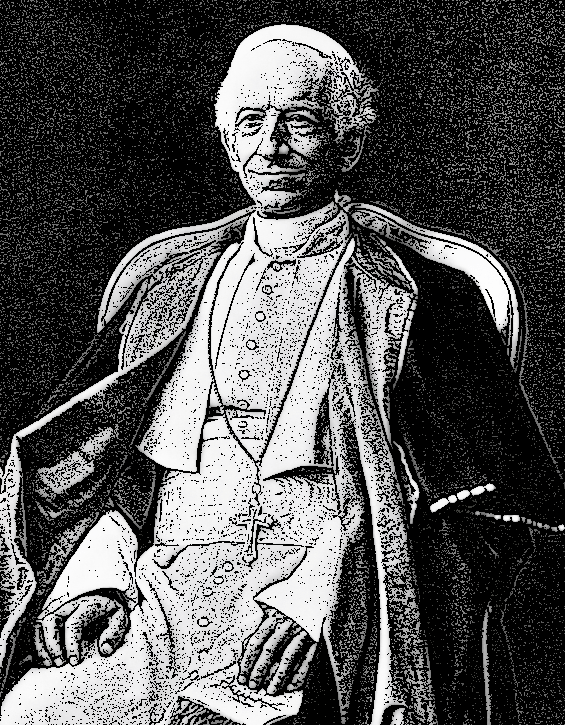
I am Catholic, as many of my enemies are sure to know by now. I do not answer to him, I answer to this proud nation I was born in, but I do hold reverence all the same. Well, he’s in the news because he was recorded in a sense.
The pontiff is 88, very old even for this ancient position. Many presume he has little time left on Earth. In a parting embrace of sorts, he allowed a camera crew to take photos and even do limited moving footage. He is, without question, the first holy figure to be recorded in this manner. This footage will likely endure long after his mortal remains have turned to dust. A nice, peaceful image, an old man eternally happy, because a moment in time was captured. Perhaps this mercy will be given to all of us in time, a sort of immortality for those who care.

