

Mission Statement:
To endeavor to bring to all residents of the Five States the most current and important news from across the entire Five States region. Never yellow, the Five States Herald vows to serve only the people of the Five States, from New Austin to Lemoyne, free of charge now and forever.

Border in Germany Prove Treacherous!
By Sofia Kathleen Fairfax – Lead Correspondent
Germany has rapidly expanded its military grasp since its stunning victory over France in 1871. As a result of that war, the nation has industrialized and become a potent economic and military force. Unsurprisingly, this has led to a large number of people wanting to enter… and leave.
Border stations every day are packed with people wanting to immigrate to the new power of Europe. Some have reported waiting up to 8 hours to speak with an official; even then, the hardest part has yet to occur. Germany is picky as can be about who they want. Even if you filed all your paperwork correctly, it’s still possible, if not likely, that you will be rejected. At the same time, men and women who are worried about future wars are trying to get out of the country, often at the same border stations. This has only led to yet longer lines.
As a result, incidents including violence have increasingly occurred with those in line; in one instance, a man threw a grenade at an armed guard. Protests from the French and the Poles have also increased.
It’s hard enough to stand in line for half a day before politely saying ‘please’ as your papers are reviewed. Having to do it as everyone around you fights, argues, and dies? God help anyone who wants to be a German.

Mystery boat sparks prolonged gun battle at Thieves’ Landing
By Jose Chavez
A lengthy and chaotic gunfight erupted this week in the lawless settlement of Thieves’ Landing, drawing the attention of New Austin Rangers after leaving two dead and several others wounded. The riverside outpost has long served as a haven for outlaws, thieves, and other ne’er-do-wells who generally keep their disputes among themselves, resulting in little regular law enforcement presence. Witnesses reported that the violence began when a boat attempted to dock at the settlement for reasons that remain unclear. “I don’t know what the boat was doing or why it was trying to dock,” said one of the area’s few non-outlaw residents, “but they were shooting just like other folks shot back at them.” According to accounts, dozens of gunmen became involved in a battle that lasted nearly an hour, with both sides spending much of the confrontation firing from cover and blasting away at walls, crates, and buildings rather than advancing. The shooting finally ceased when the vessel pulled away from the dock and departed. Rangers investigating the incident have found little cooperation among local residents, many of whom claim to have seen nothing at all. With no clear suspects, no identified motive, and few willing witnesses, officials privately admit the inquiry has already ground nearly to a halt.

Arrowhead discovery fuels speculation over missing Wapiti tribe
By Jane Duran
A recently discovered arrowhead north of the Dakota River has renewed speculation regarding the whereabouts of the long unseen Wapiti Tribe. The artifact, found not far from the site of the Wapiti Indian Reservation, appeared notably newer than many relics commonly recovered in the region, leading some to wonder whether members of the tribe still move quietly through the Five States. The Wapiti once traveled widely across these lands, but as the United States continued its westward expansion, the tribe was pushed onto a small reservation lacking fertile soil and lying far from traditional hunting grounds. Reports of the tribe have grown increasingly rare, with some claiming they have not been seen for months and others insisting years have passed without a confirmed sighting. Their absence has inspired stories of a ghost tribe whose spirits wander the wilderness and take physical form when needed, though many frontiersmen dismiss such tales and maintain that the Wapiti simply know the country better than anyone else. “If they do not want to be seen, they will not be seen,” remarked one trapper familiar with the mountains. Whether the arrowhead proves anything remains uncertain, but for many it is a sign that the Wapiti may yet remain somewhere within the vast reaches of the Five States.

Buck’s curious rampage leaves farmer baffled
By Odell Clifton
A rancher in Big Valley reported an unusual disturbance this week after a mature buck was seen tearing through his property in what he described as a fit of inexplicable agitation. The animal reportedly sprinted between sheds and fences, scattering tools, upsetting feed buckets, and knocking over several stacked crates. “It charged a box so hard it fell over!” the farmer told the Herald, still bewildered by the affair. According to the account, the buck appeared neither frightened nor pursued, but instead ran about the yard with no apparent purpose before abruptly bounding away toward a nearby stand of timber and vanishing into the forest.
Naturalists consulted by the Herald could offer no certain explanation. Some suggested the animal may have been suffering from illness, while others proposed it could have consumed poisonous herbs known to affect behavior in wildlife. One local resident put forward a more fanciful theory, claiming the buck behaved “like it didn’t know how to be a buck, as if it had only just become one that very moment.” The suggestion was met with laughter by those present and dismissed as nonsense. Even so, the strange episode has joined a growing collection of curious frontier tales for which no satisfactory answer has yet been found.
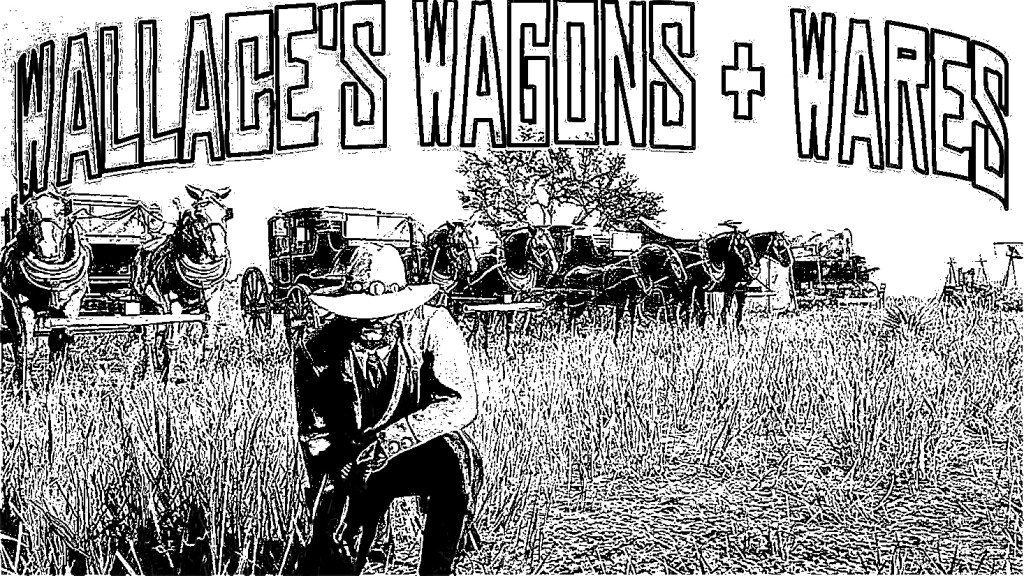

Valentine man makes a discover and tells entire town about it
By Emery Cosberry
Residents of Valentine were treated to an unusual spectacle this week when a local cowpoke spent nearly an entire day enthusiastically informing anyone willing, or unwilling, to listen about what he described as a life-changing discovery. Beginning shortly after breakfast, the man reportedly approached townsfolk, ranch hands, sheep herders, wagon drivers, and even travelers merely passing through, asking a single question: “Have you ever had one of these?” Witnesses said he then produced a Bartlett pear and launched into an animated account of his experience eating it. “I ain’t never seen a man so excited in my life,” one resident remarked. “He stopped me three separate times to make sure I’d understood how juicy it was.” Though some admitted the constant interruptions became tiresome, most agreed the man’s boundless enthusiasm earned him considerable patience.
The source of the excitement was not gold, a new invention, or some remarkable frontier discovery, but rather the humble Bartlett pear itself. According to those familiar with the man, he had spent most of his life subsisting on meat, beans, canned goods, and whatever game happened to cross his path, never once having sampled a fresh pear. Upon finally doing so, he reportedly declared it “refreshing beyond reason” and immediately purchased every remaining pear from the Valentine general store. By evening, store shelves stood empty while the cowpoke continued evangelizing the fruit from the saloon porch. Several townspeople confessed they eventually purchased pears themselves simply to determine whether the excitement was justified. However, since the store was sold out they had to purchase them from the raving cowpoke himself.

Bayou tale raises questions after outlaw vanishes among alligators
By Emeline Vickroy
Residents along the waterways of Lemoyne have spent the week discussing a grim account involving the outlaw Cecil Buck and the well-known bounty hunter Tom Lockburn. According to several witnesses, Buck was seen being forced through the shallow waters of the bayou while under the barrel Lockburn’s gun. One observer claimed there was no mistaking the bounty hunter’s identity. “I knew it was him not because of the eyepatch, or his hair or his beard,” the witness told the Herald. “I knew it was him by his stature, the way he held himself, ain’t no one else it could have been.” Witnesses further allege that Buck repeatedly pleaded for mercy as he was driven deeper into the murky water. Those pleas reportedly ceased when alligators descended upon the outlaw, dragging him beneath the surface in a frenzy that left little doubt as to his fate. Buck was wanted in connection with a murder case and had also gained notoriety in some circles for allegedly killing a dog, a detail that has attracted nearly as much discussion as the manner of his reported death. One train clerk familiar with bounty traffic remarked that Lockburn had appeared largely indifferent to the reward until learning of the dog’s killing.
The story has provoked sharp disagreement throughout the Five States. Some citizens have described the alleged incident as rough frontier justice delivered to a man with little regard for life, while others have condemned it as an execution without trial. Officials in Saint Denis were unequivocal when asked about the reports. Representatives of the police stated that if the account is true, the death would constitute murder regardless of any bounty that may have existed against Buck. At present, no official investigation has been announced, and Lockburn himself has offered no public comment. As with many stories that emerge from the fog-shrouded waters of the bayou, the truth may prove difficult to separate from rumor. Nevertheless, the account has added another dark chapter to the growing legend surrounding one of the frontier’s most feared bounty hunters.
Naturalists under scrutiny as debate spreads across the Five States
By Frederick Vannesse
From the rolling hills of New Hanover to the deserts of New Austin, a lively debate has taken hold among ranchers, hunters, traders, and townsfolk concerning the growing work of naturalists. Supporters argue that the study of animals, their habits, migrations, and health may one day provide valuable knowledge about the natural world. They contend that understanding wildlife benefits everyone who depends upon the land, whether for hunting, ranching, or simple survival. Several naturalists interviewed by the Herald maintained that collecting observations, samples, and records today may yield answers years from now. Critics, however, remain unconvinced. “They go around shooting animals with darts to make ’em sleep,” remarked one hunter outside Valentine, “shooting them properly would be more efficient and feed a family.” Others have complained that animals harvested after sedation often possess altered flavor and poor tasting meat, leading some hunters to view the practice as wasteful.
Much of the criticism centers on the collection of blood samples, a cornerstone of many naturalist studies. While practitioners insist such samples help reveal information about animal health and populations, many citizens struggle to see the practical benefit. “What is the benefit of blood samples? What do you do with them?” one hunter asked. “And why can’t they just take the blood from an animal freshly killed?” Such questions have become common in saloons and general stores throughout the territories. Yet even among skeptics there is a growing acknowledgment that the value of the work may not be immediately apparent. Several prominent sportsmen who questioned the methods nevertheless suggested that future generations may discover uses for these records and specimens that are not yet understood. For now, the matter remains unsettled, with both sides finding no shortage of supporters across the Five States.

