

Mission Statement:
To endeavor to bring to all residents of the Five States the most current and important news from across the entire Five States region. Never yellow, the Five States Herald vows to serve only the people of the Five States, from New Austin to Lemoyne, free of charge now and forever.
Stolen ledgers spark mystery
By Frederick Vannesse
Over the past month, a string of targeted robberies has rocked the transport and freight systems stretching from West Elizabeth to Lemoyne. It started near Strawberry, where a Union Freight coach was ambushed and its armed escort killed with cold precision. The strange part? Nothing of value was taken except a single weathered ledger from the lockbox — property of the railway company’s finance division. A week later, a clerk’s office in Valentine was hit in the dead of night, records rifled through, and again, only a ledger missing. Law enforcement in Rhodes intercepted a tip about a gray-coated man boarding outbound trains with no luggage and a forged ticket, always vanishing before the next stop.
At first, the robberies seemed random — isolated acts by a skilled operator. But as the Bureau of Internal Revenue became involved, a pattern emerged. All the stolen ledgers were tied to shipments and contracts overseen by a recently dissolved subsidiary of Lemoyne Southern Rail — a company long suspected of running contraband and laundering profits through phantom businesses. Some of the names in those books were linked to politicians, foremen, and even a deputy out of Tumbleweed. One Pinkerton agent privately remarked, “Whoever’s taking these ledgers isn’t after cash and they’re hiding trail well.” Rumors suggest the thief might be a former bookkeeper turned whistleblower, or a hired hand working for someone trying to erase old sins.
Despite increased patrols, the suspect remains elusive. Blackwater’s sheriff’s office claims they nearly caught him on the road east of Manzanita Post, but the rider outpaced them through the fog. With no bounty formally posted, and no official agency claiming jurisdiction, the case has stalled. But across the states, companies and officials connected to those ledgers are suddenly retiring, vanishing, or “meeting accidents.” And one thing is clear — whoever holds those books now has leverage worth more than any gold shipment on the line.
New Austin Man Invents Chili Substance!
By Sofia Kathleen Fairfax – Lead Correspondent
A resident of New Austin claims to have created a new concoction based around chili peppers crushed into a substance one can use in cooking. William Gebhardt is his name; he lives in a saloon he runs in Tumbleweed. Chili is quite popular in town, and on many occasions, he had cooked chili, but he often found it difficult to get the peppers, especially since Mexico has been going through a turbulent time lately.
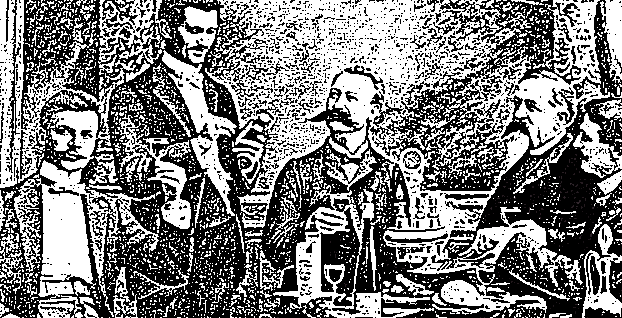
To circumvent the issue, Gebhardt would crush the peppers by running them through a meat grinder he had purchased from Blackwater. The goal was simply to extend the use of the peppers, but the resulting powder was deemed flavorful and paired well with a variety of other foods.
Since then (Gebhardt claims he first created the powder in 1894), this tiny saloon has been producing the concoction dubbed chili powder and selling it across the Five States and into other states, such as California. It sells nearly off the shelf and has made Gebhardt a wealthy man; he plans to move operations from Tumbleweed to Saint-Denis in the next few months. If he does, I need to try some of this powder; it has many fans, and I do not doubt them when they say its flavor stands above even high-quality pepper.

Can a cold prayer protect you from the Ambarino’s rigid temperatures?
By Jane Duran
Somewhere near Lake Isabella, a prospector named Caleb Baines built a shrine out of old bones and rusted pickaxes, claiming it brought “blessing in the freeze.” Folks who have been camping in Colter planning the upcoming revitalization thought he touched by the cold. “Couple of our surveyors ran into him while scouting other locations of interest,” said one witness, “a bit mad he was.” But when two hunters survived a blizzard, some began to wonder if it was thanks to the small altar’s cover. Some came to the alter to leave various items, such as alcohol and tobacco for protection in the cold. Last week, Caleb was found frozen stiff beside the shrine, arms crossed, face peaceful. The only oddity? Someone had taken the shrine’s centerpiece — a petrified heart said to have belonged to a legendary white bison.
WANTED!
Investigators: Travel the Five States and report on what is going on.
Writers: Write the stories investigators find!
Photographers:
To take photographs to be used in the Herald.
Can also do all three!

Potential oil pocket proves to be ‘not oil’
By Odell Clifton
In the hills west of Blackwater, a surveyor from Saint Denis claimed to have found an untapped oil pocket beneath a stretch of unclaimed scrubland. Within days, a small crew arrived — tents pitched, drilling equipment hauled in, and lanterns burning through the night. Locals scoffed at the fuss until the third evening, when the air turned thick and the earth began to shake like it had a fever. Men staggered out of their tents raving about voices beneath the soil and shapes moving in the derrick’s shadow. By dawn, the site was deserted, the workers vanished, and only the surveyor’s boots remained — upright in the mud, like something had sucked him straight down.
Now, the drill rig stands crooked, half-swallowed by creeping weeds, and the surrounding dirt gives off a strange heat even in winter. Hunters say game avoids the area entirely, and a U.S. Marshal who went to investigate left after an hour, visibly pale and silent. He only said one thing before riding off: “It’s not oil.”

Who is the Painted Man
By Emery Cosberry
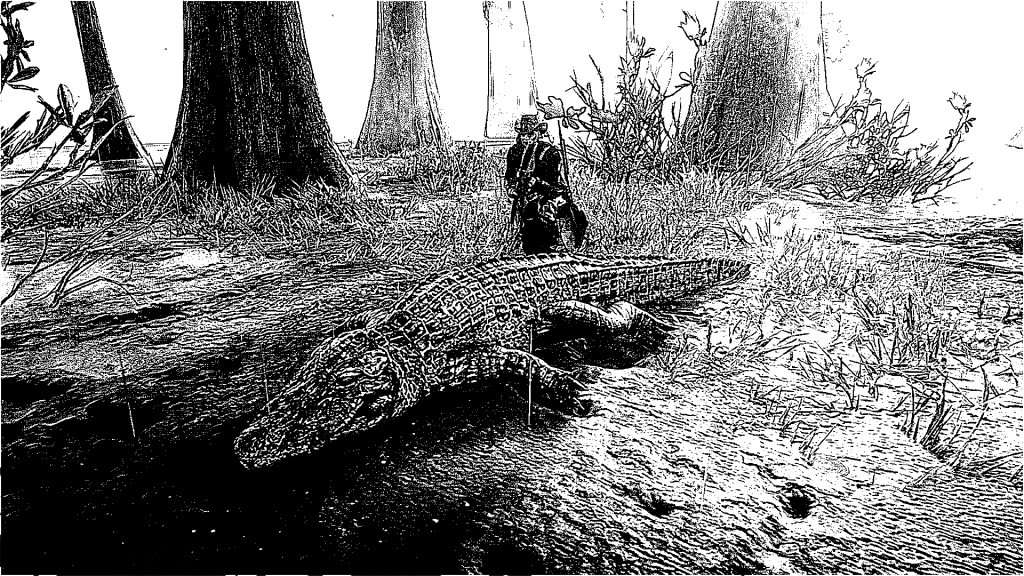
A bounty hunter out of Valentine brought in a wiry outlaw known only as “The Painted Man” — so named for the crude skull tattoos inked across his face and the deep, deliberate grin carved into his cheeks. Said to rob stagecoaches and disappear into the treeline like smoke, the man had eluded capture for over a year. When he was finally hauled in, bound in irons and mumbling a strange lullaby, the sheriff locked him in the town jail overnight. But by morning, the cell was empty. No broken bars, no signs of forced escape — just silence and a trail of blood-slick footprints leading to the window, which was still barred shut.
The sheriff swore up and down that no one came or went and deputies showed the transfer log did not show any transfers to state authorities. But some townsfolk claimed they heard whistling in the streets around midnight — high and tuneless, like a child trying to remember a song they never really knew. The next night, the deputy who had processed the Painted Man vanished from his home. The night after that, one of the stagecoach drivers who had been robbed turned up dead, eyes wide, face painted in ash, and that same grotesque smile carved into his skin. Folks say the man is still out there, riding the trains and walking the tracks, always just ahead of the light.
Now, no one in Valentine talks about the Painted Man aloud. They say he only comes when you remember his name too clearly. Some keep their windows barred with iron; others leave out cigars and cartridges by the tracks as a kind of offering. But every so often, someone goes missing — and always, always, the cell in the jailhouse stays empty… but never locked.

Revenues have difficulty tracking down elusive moonshiner
By Aloysius Levron
Near the moss-drenched edges of the Bluewater Marsh, the Bureau of Internal Revenue staged one of its largest moonshine raids in recent memory, storming the Barthelmy Brothers’ sugar camp under the cover of darkness. The brothers — a secretive Creole family with rumored ties to voodoo and old Confederate smuggling routes — had been distilling bootleg rum deep in the swamp. Five copper stills were destroyed, over two dozen crates of illicit liquor seized, and six men arrested in the operation. But the youngest brother, Claude Barthelmy, escaped into the reeds and vanished. Agents combed the marsh for days, but the only thing they found was a single boot full of molasses and a satchel stuffed with herbs and bones.
Weeks later, strange things began to happen. New stills started cropping up, deeper and harder to find — never more than one or two barrels, but always expertly made. The initials “C.B.” were burned into the wood with a branding iron, and a lingering scent of expensive cigars hung in the air, even when the fires were cold. Locals whisper that Claude made a deal with something older than the swamp — and now the marsh makes room for his stills like it’s helping him hide. Agents sent in to investigate often come back sick, their eyes bloodshot and nerves frayed.
Neither snow, nor rain, nor goose deters postal inspectors
By Adam Parvey
In the spring of 1898, a gang of conmen led by a self-styled “Baron” Lucien Devereaux was running an elaborate scheme across the Five States — selling phony land grants through the mail, complete with forged signatures and official-looking seals. Local sheriffs and marshals wrote it off as a civil matter, until one of the fake deed were sent through the US Postal Service, drawing the attention of Surveyor General M. J. Wright himself. The surveyor general called for an investigation into the fake deed. What followed was a six-week pursuit involving two postal inspectors, a collapsible canoe, a rented mule, and one particularly aggressive goose outside Saint Denis.
Despite being laughed off by other lawmen, Inspectors Amos Greeley and Bernard Pike dogged the gang across state lines — intercepting letters, bribing telegraph clerks, and once disguising themselves as census workers to get close. They finally caught Devereaux in Blackwater, reading a catalog for mail-order top hats. When arrested, he reportedly said, “This is beneath the dignity of a nobleman,” to which Inspector Pike replied, “You committed mail fraud with a goose-feather quill, sir. Dignity left the station.” The Baron was sentenced to ten years in Sisika Penitentiary — all because he licked the wrong envelope.
 The Five States Herald