

Mission Statement:
To endeavor to bring to all residents of the Five States the most current and important news from across the entire Five States region. Never yellow, the Five States Herald vows to serve only the people of the Five States, from New Austin to Lemoyne, free of charge now and forever.
The Cure for Wellness?
By Sofia Kathleen Fairfax – Lead Correspondent
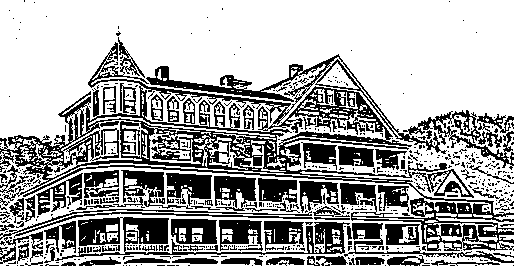
What ails the body and mind? Smarter people than I have pondered this since time immemorial. The sickness that rots the body, and the torment that haunts the mind. The first doctor to understand why we take ill and how we shall endure, will become rich and famous beyond all measure.
Of course, no such thing will ever happen, yet we try all the same. Sanatoriums dot the landscape, with the highest concentration in California. Patients include those who are suffering from late-stage tuberculosis, smallpox, and those driven mad by grief and misery. Inside, doctors experiment on these people; most are expected to die, so mercy is shown. The results are often gruesome, yielding only a minuscule amount of knowledge. Attempts to construct one of these facilities in the Five States have so far failed, perhaps due to the contentious nature and the high estimated cost.
The work we do today will be remembered, but how it’s viewed will vary greatly. Maybe something good may come from these experiments, and numerous lives will be spared. Or perhaps it’s all for not, and we are but playing a cruel god to those with little time left. I dearly hope it is the former, for we all shall burn in this life or the next, if it’s the latter.

Tumbleweed jail straining as bounty hunters deliver prisoners alive
By Jose Chavez
The small jailhouse in Tumbleweed has found itself in an unusual predicament this weekend after several bounty hunters rode in with their captured outlaws alive, a rarity in the harsh desert territory of New Austin. The cells, normally quiet save for the occasional drunk or drifter, are now packed tight with men awaiting transfer. In this unforgiving country, the kind of outlaw who makes a living among the rocks and dust seldom surrenders peacefully. Many bounty hunters, facing rifle fire and knife fights in lonely gulches, end their hunts with the outlaw dead simply to secure their payment and ride out alive themselves.
That pattern was turned on its head this weekend when multiple hunters took the extra risk to haul their quarry breathing into town. The result has been a crowded lockup and a sheriff’s office struggling to keep order. “Usually we can just stack dead bodies up and it ain’t much of a problem,” one weary deputy admitted. “But we don’t have that much room for living prisoners.” With Tumbleweed sitting far from larger territorial facilities, the captured men must remain tightly confined until authorities can arrange transport. Officials say a pickup from a proper prison is expected early this week, though until then the jailhouse remains packed wall to wall with some of the desert’s most unwilling guests.

The god of death denied: a daring rescue that defies belief
By Jane Duran
A remarkable rescue unfolded high in the cold reaches of Ambarino when a cowpoke, for reasons still unknown, hurled themselves from a steep mountain cliff that would have surely meant their death upon the rocks below. Witness accounts are scarce in that lonely country, but what is known is that another traveler happened to be riding nearby at the very moment the desperate plunge was made. With scarcely a heartbeat to spare, the traveler rode their horse to the cliff’s edge, pulled a lasso from the saddle, and cast the rope out over the abyss toward the falling figure.
By some miracle of aim and nerve, the rope found its mark. The traveler braced hard in the saddle and hauled back with the strength of two full-grown grizzlies, dragging the dangling cowpoke upward from the jaws of the ravine. Those who have heard the account say the rescue defied belief, the rope tightening just as the falling rider vanished into the mountain mist below the ledge. What moved the cowpoke to leap remains a mystery, but one fact is plain: whatever path that soul now walks, for good or ill, was granted only by the quick thinking and steady aim of the unknown traveler who denied the god of death his due that day.

Boastful poacher draws cold reception in Blackwater saloon
By Odell Clifton
A loudmouthed fellow stirred no small measure of anger inside a Blackwater saloon this week after proudly boasting of poaching across the Great Plains. According to patrons present, the man spoke openly of trailing behind working hunters and helping himself to their freshly taken animal carcasses before they could haul them away. Between swigs of whiskey he reportedly laughed about slipping in unnoticed and carting off the spoils of another man’s labor, presenting the scheme as if it were clever sport rather than outright theft.
His tale was met with little amusement among the many hunters who had gathered there after long hours in the plains. Though fists never flew, the room grew tense, and several made plain their disapproval. One hunter warned the braggart that stealing from men who spend their days carrying loaded rifles is a dangerous game indeed. “A man’s luck can stretch only so far out there,” the hunter said grimly. “One of these days it’ll run out.” The poacher reportedly laughed off the warning, but those present left the saloon with the sense that if the man continues his practice, the plains themselves may soon deliver a harsher reply.

Puzzling train robberies leave Valentine scratching its head
By Donna Deshner
Valentine has been gripped by a peculiar string of train robberies, though not the sort that sends bankers diving for cover or rich men clutching their ledgers. According to railroad hands and shaken passengers, a brazen culprit has halted freight and passenger cars alike only to make off with items of the strangest variety: crates of canned peas and, in the most recent incident, a single jar of hair pomade. Witnesses say the robber showed little interest in cash boxes or valuables, leaving money untouched while rummaging through supply chests and baggage with the focus of a hungry raccoon. One brakeman swore the thief “looked purposeful, like they knew exactly which crate they wanted,” though he admitted the whole affair happened in such dim lamplight he could not swear whether the figure was man, woman, or something else entirely.
Speculation has run wild in Valentine. Some townsfolk insist the robber must be a soul unwell in the mind, perhaps gripped by some strange appetite for peas and grooming tonic. Others argue the culprit may not be human at all, pointing to scattered tracks near the rail bed that one rancher claims resemble those of a large animal rummaging through supplies. A few bolder voices whisper that a roaming gunslinger was seen along the rail line earlier that evening, though no evidence ties him to the matter. Sheriff Curtis Malloy has begun inquiries and promises a careful investigation, but as of this writing the strange thief of peas and pomade remains at large.

Old war torpedo unearthed in Lemoyne field
By Mathilde Orry
A cowpoke wandering the quiet stretches of Lemoyne countryside recently uncovered a dangerous relic of the old war while sweeping the soil with a curious metal detector. Digging beneath the grass, the rider uncovered what appeared at first to be a rusted iron canister, squat and heavy, fitted with a pressure cap at its crown. The device was soon recognized for what it truly was: a land torpedo, a buried explosive used during the Civil War to maim advancing soldiers. These infernal machines were planted beneath roads or fields and designed to detonate when stepped upon or disturbed, the pressure striking a firing cap that ignited powder packed inside the metal casing. Many such torpedoes were left buried when the armies moved on, forgotten beneath farmland and pasture.
Unaware of the danger, the cowpoke reportedly hauled the iron shell straight into a general store in Rhodes, where it was laid upon the counter for inspection. There it caught the eye of an elderly veteran who had served during the war and recognized the object at once, warning all present that the town was harboring a live torpedo. Alarm spread quickly through the shop, and the device was carefully carried far beyond the town limits before being dismantled by steady hands in a remote patch of countryside. Those who witnessed the discovery say the cowpoke had been a single step away from death, the old charge lying dormant beneath their boots until fortune, or Providence, guided their hand to dig rather than tread.
Federal inquiry casts shadow over famed bounty hunter Tom Lockburn
By Adam Parvey
Federal lawmen have quietly opened an inquiry into the activities of the widely known bounty hunter Tom Lockburn, whose name has appeared in earlier reports throughout the Five States. The investigation concerns allegations that Lockburn may have been pursuing privately issued bounties, contracts posted by individuals or groups without legal authority, rather than warrants recognized by territorial or federal offices. Officials fear such practices could erode confidence in the legitimate bounty system relied upon by sheriffs and marshals across the frontier. “Some folks may even be confused and believe they are hunting legitimate bounties,” one lawman involved in the matter explained. “And some juries may be suspicious of those brought in on legitimate bounties. Just mass confusion, really.”
Authorities stress that the inquiry remains preliminary, though they confirm that federal agents have begun reviewing arrest records, bounty notices, and the circumstances surrounding a number of killings attributed to Lockburn during his travels across New Hanover, West Elizabeth, and New Austin. The bounty hunter, known for his brown leather trench coat and silent disposition, has long been regarded by some as an efficient hunter of criminals, while others have questioned the speed with which his targets are sometimes reported dead rather than delivered alive. Investigators are particularly interested in whether certain notices posted in remote settlements, often handwritten and bearing private seals rather than official markings, may have served as the basis for lethal pursuits.
One investigator working the case, speaking to this reporter under condition of anonymity, stated that no fewer than fifty deaths are now being reviewed as potentially linked to Lockburn’s hunts. Several of those killings, the source claims, may have occurred while pursuing such unofficial bounties, though no formal charges have been filed. Lockburn himself could not be located for comment despite inquiries made through law offices and contacts along the rail towns where he is known to pass. Federal officials say the inquiry will continue until they determine whether the bounty hunter’s work fell within the bounds of the law, and if not, how widespread these private bounties are.
 The Five States Herald