

Mission Statement:
To endeavor to bring to all residents of the Five States the most current and important news from across the entire Five States region. Never yellow, the Five States Herald vows to serve only the people of the Five States, from New Austin to Lemoyne, free of charge now and forever.
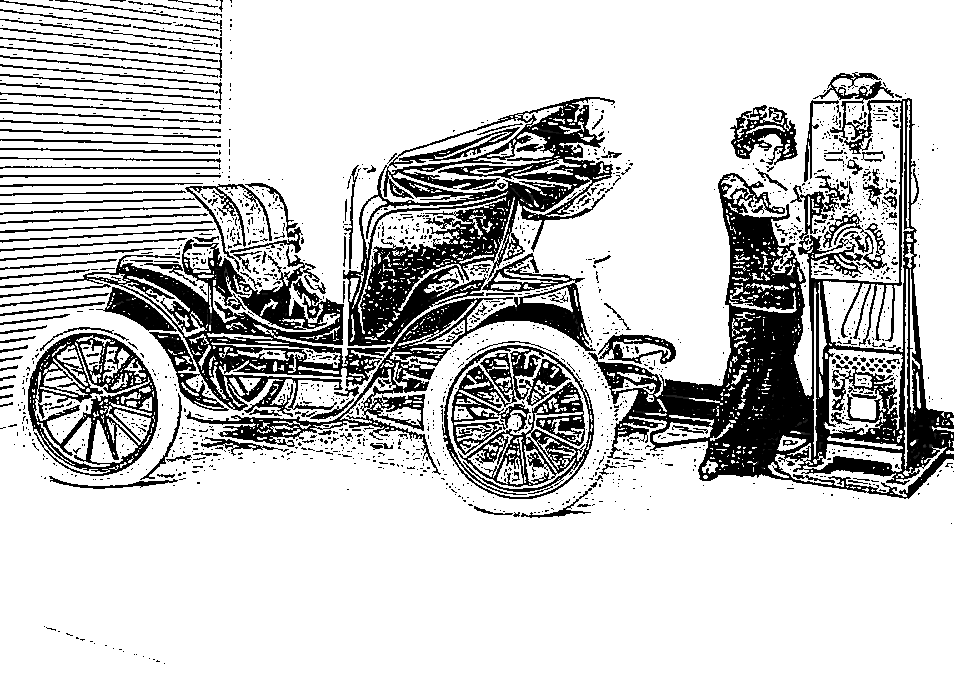
Motor Carriage of Tomorrow?
By Sofia Kathleen Fairfax – Lead Correspondent
If you are lucky enough to see a motor carriage, you will perhaps look on in awe and wonder. A horseless vehicle, powered usually by steam, going reportedly as fast as 60 miles in an hour. Alas, such vehicles are far too expensive for anyone outside the robber baron class, at least for now.
Many mechanics and engineers have been trying to create new types of motor carriages, and the most unique among them, is the electric carriage. Like the newfangled electricity that now competes with kerosene, these vehicles use the power seen in the night sky to propel itself forward. It uses large batteries that can be recharged at a station, eliminating the need for a second person to stoke a boiler like those on a steam engine.
Unfortunately, they do not seem to go fast, 9 miles in an hour reportedly, a horse can easily do that. They can also only travel for a few hours before requiring recharging, which can take several days. As of this writing, only a handful have been sold, mainly in New York and Chicago, but many believe this is the future of transportation. The wonders of science know no boundaries.

Farmhand slain by single rifle shot outside desert town
By Alois Burditt
A farmhand was killed in New Austin this week after a lone rifle report cut the afternoon stillness and left one man fallen among the hay. According to the only witness, both hands were stacking bales when the shot rang out without warning; the surviving man threw himself to ground and waited for a second crack that never came. No further fire followed, and by the time he dared look up, the shooter had already vanished into the desert, leaving a killing so precise it suggested intent rather than quarrel.
Authorities say the manner of the shooting points to a deliberate taking, the marks of patience and distance evident in the wound and the lack of any exchange. No motive has yet been established, though neighbors report the deceased had lately come into money, and not all of it was believed to be earned by honest sweat. The law continues its inquiries, canvassing roads and ridge-lines with little to show but questions, while the farm returns to its work under the uneasy knowledge that a careful hand may still be counting the cost of a single pull of the trigger.

Signs of wild revelry found near Cattail Pond
By Jane Duran
Revenue agents working a cold lead on a suspected moonshine operation in Cattail Pond instead stumbled upon the remains of what can only be described as a sizable celebration. An abandoned building near the water bore no clear mark of a still, past or present, but the boards inside were steeped with the sharp, sour stink of alcohol, which agents believe is the result of years of alcohol seeping into the floorboards. The agents reported no equipment, no mash, and no sign of hurried flight.
The pond and its banks told the rest of the story. Dozens of empty bottles lay scattered in the snow and reeds, with small fire rings still blackened and scraps of meat and bread frozen where they fell. What occasion drew such a crowd into the high country remains unknown, but one agent, speaking only on condition his name be withheld, offered a blunt theory: “It is clear they knew we were coming and had a massive party to consume all of the evidence.” Requests for comment from a spokesman for the Bureau of Internal Revenue went unanswered, leaving behind nothing but the quiet water, the trash of merriment, and the uneasy sense that someone in Ambarino celebrated not being caught at all.

Outlaws found guarding rare birds along the coast
By Daisy Fairman
An odd peace has taken hold at Quaker’s Cove, where whooping cranes, those tall, white marvels once common to wider marsh and meadow, have found a precarious refuge. Their numbers elsewhere have been thinned by settlement and the steady press of farms, and by hunters who prize their feathers as charms of luck and fortune. Yet here along the broken coast of West Elizabeth, the birds stalk the shallows unmolested, nesting within sight of waters long rumored to serve as a smugglers’ door.
Hunters who have ventured into the cove in search of plumage report being met not by game, but by gunfire. Warning shots cracking overhead and boots pounding after them until they fled the beach. The men said the shooters made no move toward the cranes themselves, nor any attempt at theft or threat beyond driving the hunters off. It is not clear if the outlaws are protecting the birds intentionally or acting in their self-interest and keeping their activities private. Either way, the birds have found sanctuary here.

Brief violence flares and fades outside deputy’s office
By Emery Cosberry
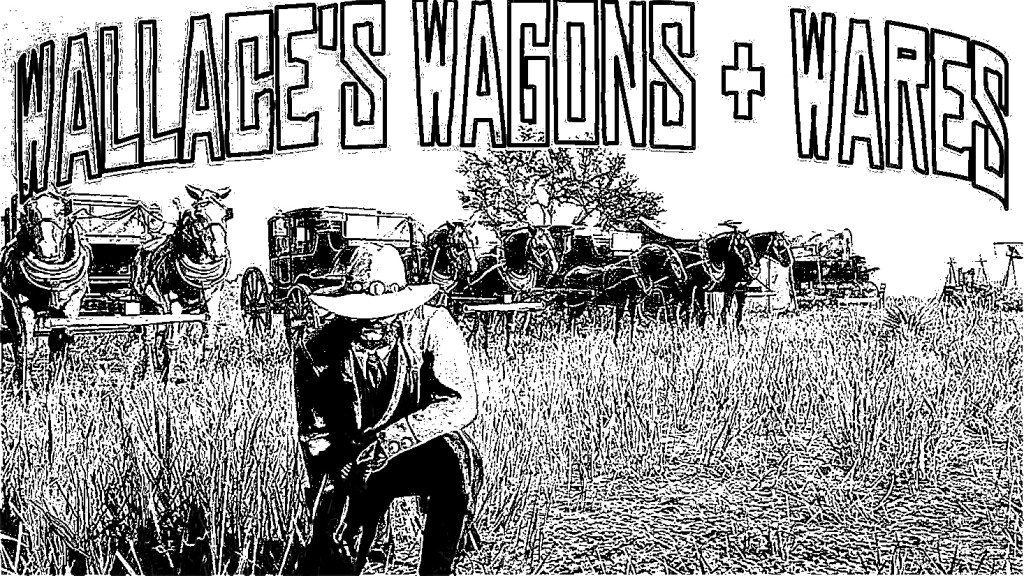
A short, sharp burst of violence unsettled a New Hanover town this week and was finished almost as soon as it announced itself. Witnesses report a cowpoke, heavy with two crossed bandoliers and carrying a matched pair of shiny plated revolvers, strutted in front the deputy’s office and fixed his attention on a lone traveler passing by. Words were exchanged, then the cowpoke struck the traveler with the butt of his gun, an act that drew gasps from onlookers and a sudden hush from the street.
What followed was decisive. The traveler shoved his assailant hard to the ground and fired several shots in quick succession, killing the man before he could regain his feet. A deputy who observed the encounter from nearby stated plainly that the killing bore all the marks of self-defense, noting the initial assault and the immediate danger posed by a man already armed and boasting. No arrest was made, and by dusk the blood had been washed from the boards, leaving behind another reminder that in New Hanover, bravado is a poor substitute for skill.

Four found dead in Scarlett Meadows, cause and culprit unclear
By Emeline Vickroy
Scarlett Meadows yielded four bodies this week, discovered at first light amid churned grass and blackened soil, the scene bearing the mixed handwriting of powder and lead. Two of the men lingered before dying, their wounds burned and torn in a manner consistent with dynamite, while the other two were dispatched by gunfire so sudden that only one managed to loose a shot in reply. Local authorities could offer no motive, only the sober assessment that the killing was planned, brief, and executed with the sort of confidence that leaves little behind.
Whispers moved faster than warrants. Several townsfolk in Rhodes told this paper they had seen a one-eyed man at the Parlor House that very evening, eating alone and lingering over his plate, identified him as “that Lockman fellow, or something like that,” and remarked upon a sulfur tang about him “as if he’d been blasting mines all day.” The testimony is noted here for completeness, though it fails to place a hand to a fuse or a finger to a trigger, the described scent is consistent with dynamite use. By the time the bodies were counted, Tom Lockburn had already departed the town, and no witness could say from which direction the night had brought him, or to which border the morning carried him away.
Questions of identity roil the Five States
By Adam Parvey
A curious and troubling pattern has emerged across the Five States, as several citizens found themselves unable to prove they were who they claimed, with consequences both swift and severe. In multiple towns and territories, men and women were turned from their own doorsteps or removed from property they insisted was lawfully theirs, authorities unconvinced by name alone. Elsewhere, travelers were refused entry into the Five States altogether, their claims dismissed for lack of acceptable proof, leaving them stranded at borders or forced back onto the road. The incidents were not tied to any single crime or conspiracy, but rather to a growing uncertainty among officials about whom to trust in an age of movement, aliases, and easy disappearance.
The ordeal has stirred a wider debate now echoing through courtrooms and capitols. Some magistrates and lawmen argue that the time has come for clear standards of identification, uniform across the territories, to prevent fraud and protect property. Others counter that such demands invert the natural order, insisting that it is authority alone that must prove itself, and that free citizens should not be burdened with papers to justify their presence. The matter is expected to reach the floor of United States Congress as well as state assemblies throughout the Five States, where it will be argued not merely as a question of security, but of liberty itself, how a person is known, and who has the right to decide.
 The Five States Herald